Spider identification
Of all the spiders found inside Ontario homes this is the one worth knowing by sight. The yellow sac spider is pale, small and easy to miss, hides in a silk sac in the top corner of a room by day, and is the house spider most often confirmed as the cause of a bite, usually from being trapped in bedding or clothing.
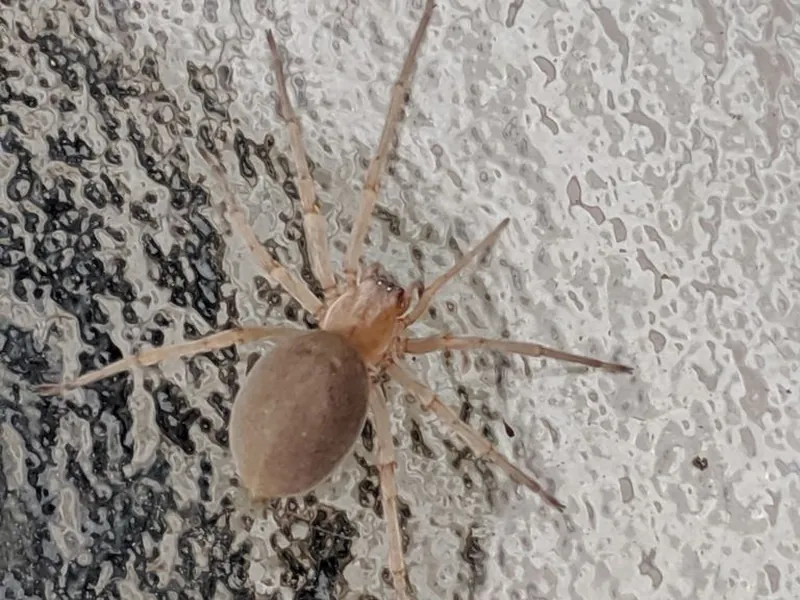
Pale yellow, cream or pale green, 6 to 9 mm, with a slightly darker stripe down the abdomen, dark tips on the front legs and long front legs. No web. By day it rests in a small flat silk sac where a wall meets the ceiling, behind a picture frame or in the fold of a curtain, and the sacs are often the first thing people notice. It hunts on walls and ceilings at night.
Indoors year round: bedrooms, living rooms, the tops of walls and ceilings, behind frames and curtains, and in garages. Cheiracanthium mildei, introduced from Europe, is the indoor species; the native Cheiracanthium inclusum lives mostly outdoors in gardens and on the house in summer and is the one that turns up in cars and sheds.
Indoors all year, most noticeable in fall when it is most active on walls at night. Outdoors from late spring to fall. Egg sacs are laid in the silk retreat and guarded by the female.
Possible, and mild. A bite is a sharp sting that reddens and itches for a few days, almost always because the spider was pressed against skin in a bed or a sleeve. Claims online that it rots the skin come from old case reports and have not held up; in verified bites no tissue damage has been found. Most "spider bites" in Ontario are never confirmed; see the bite section of our guide to common spiders in Ontario for what a real one looks like.
Indoor treatment is not part of our standard service during the spring, summer and fall seasons, but for existing customers we will quote it separately. Outdoors, removal and targeted treatment at the eaves, window frames and lights reduces the summer population that moves in through gaps in fall. Inside, the practical fix is simple: vacuum the sacs from the wall and ceiling corners, shake out clothing left on the floor, and seal the gaps around windows and doors it uses to get in. Every visit ends with a written summary of what we found and where product was applied, if any. Our spider control service and 60 day guarantee pages have the details and pricing.
Long bodied cellar spider, Common house spider, Running crab spider. The cellar spider is far longer legged and hangs in a loose web. The common house spider is brown and sits in a tangled cobweb. Running crab spiders are flat, grey and found outside on siding. Anything pale yellow with no web, resting in a silk sac at the top of a wall, is a sac spider. The full list with photos is in the common spiders in Ontario guide.
Good to know
Look for small flat silk sacs, about the size of a thumbnail, where the wall meets the ceiling and behind picture frames. The spider is inside by day and out on the walls at night.
No. It is a sharp sting followed by a red itchy mark that fades in a few days. Wash it, ice it, and see a doctor only if redness spreads or it worsens over days, which is usually a sign of infection rather than the bite.
Not normally during the busy spring, summer and fall seasons. For existing customers we will provide a separate quote. Our exterior service reduces the number that move in each fall.
Related guides: Do you need to spray for spiders, Preparing your home for spider season. Service areas where this spider is found: Sarnia and Bright's Grove, Goderich, Kincardine.

