For Spider Pros customers

Wasp, yellowjacket and hornet nest removal

A paper wasp nest by the door, a yellowjacket nest in the wall or the ground, a hornet nest in the soffit: each makes a home hard to enjoy, and anyone with a sting allergy cannot ignore it. Yellowjackets are the most common call we get in August. Because we are already on the eaves and soffits of our customers' homes, we treat and remove these nests for them as a separate service.

Not a customer yet? Book a spider visit and the nest can be treated on the same service day.
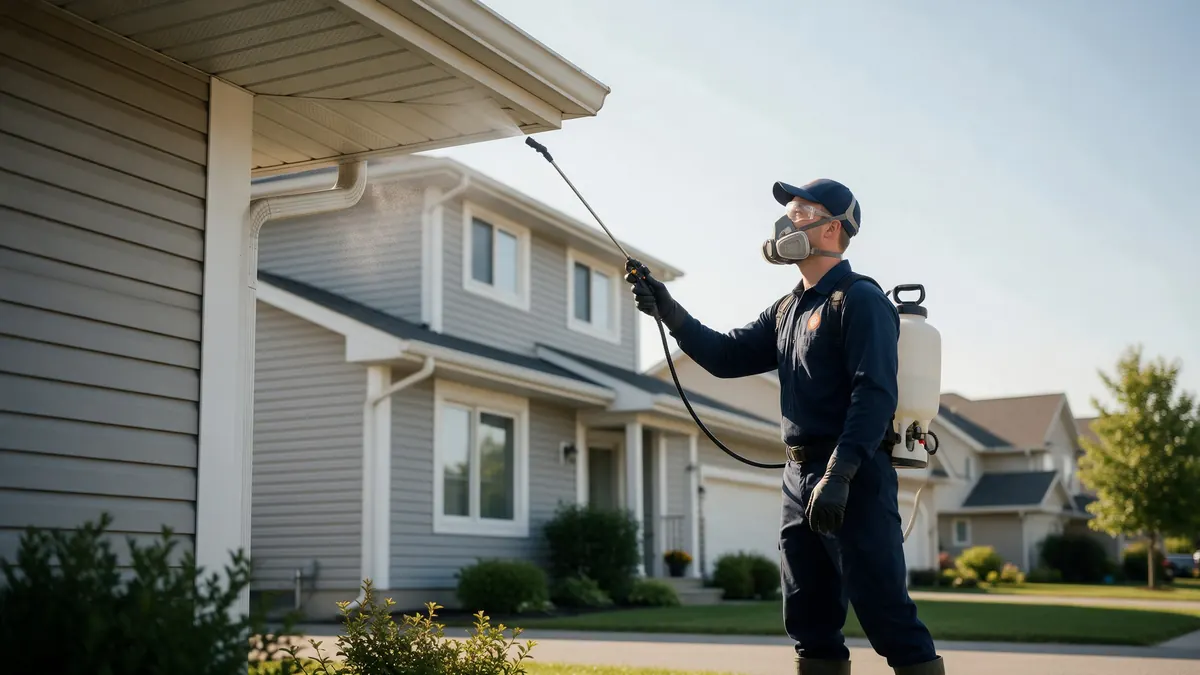
Technician treating the eaves of a home, where paper wasps often nest

What we treat

Three kinds of nest, one honest rule about bees

Paper waspsOpen, umbrella shaped combs under eaves, railings, deck boards and light fixtures. Common on porches and decks.
Bald faced hornetsLarge enclosed grey paper nests on the house, in the eaves or in a shrub beside it. Aggressive when disturbed.
YellowjacketsHidden nests in wall voids, soffits, siding gaps and the ground right beside the house. The ones that find the patio table.

Honey bees and bumblebees are not wasps, and we do not treat them. Honey bees are valuable pollinators; we will help you contact a local beekeeper who can collect a swarm or colony. Bumblebee nests usually die off on their own in the fall, and we can tell you whether yours needs anything at all.

How it works

Four steps, done in the evening

  1. Tell us where it isSend a photo from a safe distance if you can. We confirm what it is before anyone goes near it.
  2. We come on your service dayNest work is done after dusk, when the colony is home and calm, so the timing is the evening of the next day we are in your area.
  3. We treat the nestA product registered in Canada for wasps and hornets, applied to the nest or its entrance according to the label, by a technician in the protection the label requires.
  4. We remove it once it is quietReachable nests come down once they are no longer active, and you get written instructions on when the area is clear.

Timing

When nests appear and why August is the hard month

MayA single queen starts a nest the size of a golf ball. Easy to deal with and easy to miss.
June and JulyWorkers hatch and the nest grows fast. This is when a nest under the deck or in the soffit gets noticed.
August and SeptemberPeak size and peak defensiveness. The colony is largest and most sensitive to vibration; this is when stings happen.
OctoberWorkers die with the frost. The old nest is empty and will not be reused next year, but a new queen may start nearby in spring.

Please do not plug the hole. If wasps are going in and out of a gap in your siding or soffit, do not seal it and do not spray a store product into it. Blocking the entrance can push the colony into the house through another route. Keep people and pets away and tell us.

Good to know

Questions people ask about nests

How much does it cost?

From $199 plus HST for an accessible nest on the house, garage or shed. Nests inside a wall void, in the ground beside the house, or high on a two storey home are quoted before we book. The price is confirmed before any work starts.

Will the wasps come back to the same nest?

No. Wasps do not reuse a nest. A new queen may start one nearby next spring, which is why we look for small nests on every spider visit and point them out.

What if the nest is still active after you treat it?

Tell us within a week and we come back at no charge the next day we are in your area. A new nest in a new spot is a new job. The guarantee page has the details.

Someone in my home is allergic. What should we do?

Keep them well away from the nest and keep their prescribed epinephrine on hand. In an emergency, call 911. Then tell us about the allergy when you book, so the crew knows.

Can you treat a nest in the lawn away from the house?

We treat nests on or right beside the home and its outbuildings. For a ground nest out in the yard, tell us where it is and we will say what we can do.

Book my visit